If formations are the offense's opening statement, coverages are the defense's answer. Understanding what the defense is doing before the snap is arguably the most important skill in football — it's what separates good quarterbacks from great ones, and it's what makes watching football dramatically more interesting.
This guide will teach you to identify the most common defensive coverages by reading three things you can see from your couch: safety depth, corner alignment, and linebacker positioning.
The Two Big Categories: Man vs. Zone
Every defensive coverage falls into one of two families:
Man Coverage — each defender is assigned a specific offensive player. Wherever that player goes, the defender follows. You can spot man coverage by watching defenders mirror receivers' movements before and after the snap.
Zone Coverage — each defender is assigned an area of the field. They cover whatever comes into their zone. Zone defenders tend to watch the quarterback rather than a specific receiver.
Most NFL coverages blend elements of both, but the primary structure is almost always identifiable before the snap.
Start with the Safeties
The safeties are your best pre-snap read. They're the deepest defenders and their alignment tells you the most about the coverage:
- One high safety (single deep safety centered between the hashes) — this usually means Cover 1 or Cover 3. One player is responsible for the deep middle of the field.
- Two high safeties (two safeties each standing about 12-15 yards deep, split to either side) — this usually means Cover 2 or Cover 4. The deep part of the field is split between two players.
This single read — one high or two high — immediately narrows down which coverage you're looking at.
The Core Coverages
Cover 1 (Man Free)
What it looks like: One safety deep in the center. Corners are pressed up tight on receivers. Linebackers may be matched up on running backs or tight ends.
How it works: Everyone plays man coverage on their assigned receiver. The deep safety is "free" — not assigned to anyone, just patrolling the deep middle as insurance.
Strengths: Tight coverage. Hard to complete short and intermediate routes.
Weaknesses: Vulnerable to crossing routes, rub/pick plays, and speed mismatches. If a defender gets beat, only the free safety can help.
Cover 2
What it looks like: Two safeties deep, each covering half the field. Corners are often in a softer alignment, about 5-7 yards off the receiver.
How it works: The deep field is split in half. Underneath, linebackers and corners play zone. Corners typically cover the flat areas near the sideline.
Strengths: Good against deep passes to the sideline. Two deep defenders means fewer single-coverage situations.
Weaknesses: The deep middle of the field (between the safeties) is vulnerable. Fast receivers can split the safeties with vertical routes.
Cover 3
What it looks like: One safety deep in the center. Corners are off the line, 7-10 yards deep. Looks like Cover 1 at first glance.
How it works: The deep field is split into thirds — one safety and two corners each take a deep third. Four underneath defenders play zone.
Strengths: Excellent deep coverage. Three deep defenders cover more territory than two. The NFL's most common coverage.
Weaknesses: Vulnerable in the flat areas near the sideline (where the corners vacated to go deep) and in the seams between zones.
Cover 4 (Quarters)
What it looks like: Two safeties deep. Corners playing off coverage, 8-10 yards deep. Looks like Cover 2 but with deeper corners.
How it works: The deep field is split into quarters — each safety and each corner covers one quarter. Three linebackers play underneath zone.
Strengths: Almost impossible to beat deep. Four defenders in deep coverage is extremely conservative and safe.
Weaknesses: Only three underneath defenders. Short routes, crossers, and the running game can exploit this.
Cover 0 (All-Out Man)
What it looks like: No deep safety. Defenders are tight on every receiver. Usually comes with a blitz.
How it works: Pure man coverage with no safety help. Extra rushers go after the quarterback.
Strengths: Maximum pass rush pressure. Can overwhelm the offensive line.
Weaknesses: Extremely risky. If any defender gets beat, there's nobody behind them. One broken coverage = a touchdown.
How to Practice Reading Coverages
When watching a game, try this sequence before every snap:
- Count the safeties. One high or two high?
- Check corner depth. Pressed up (man) or off (zone)?
- Watch the snap. Do corners follow receivers (man) or turn and drop into a zone?
- Check your read. Was your pre-snap guess right?
You'll be wrong a lot at first. Defenses are designed to disguise their coverage. But with repetition, the patterns become clear.
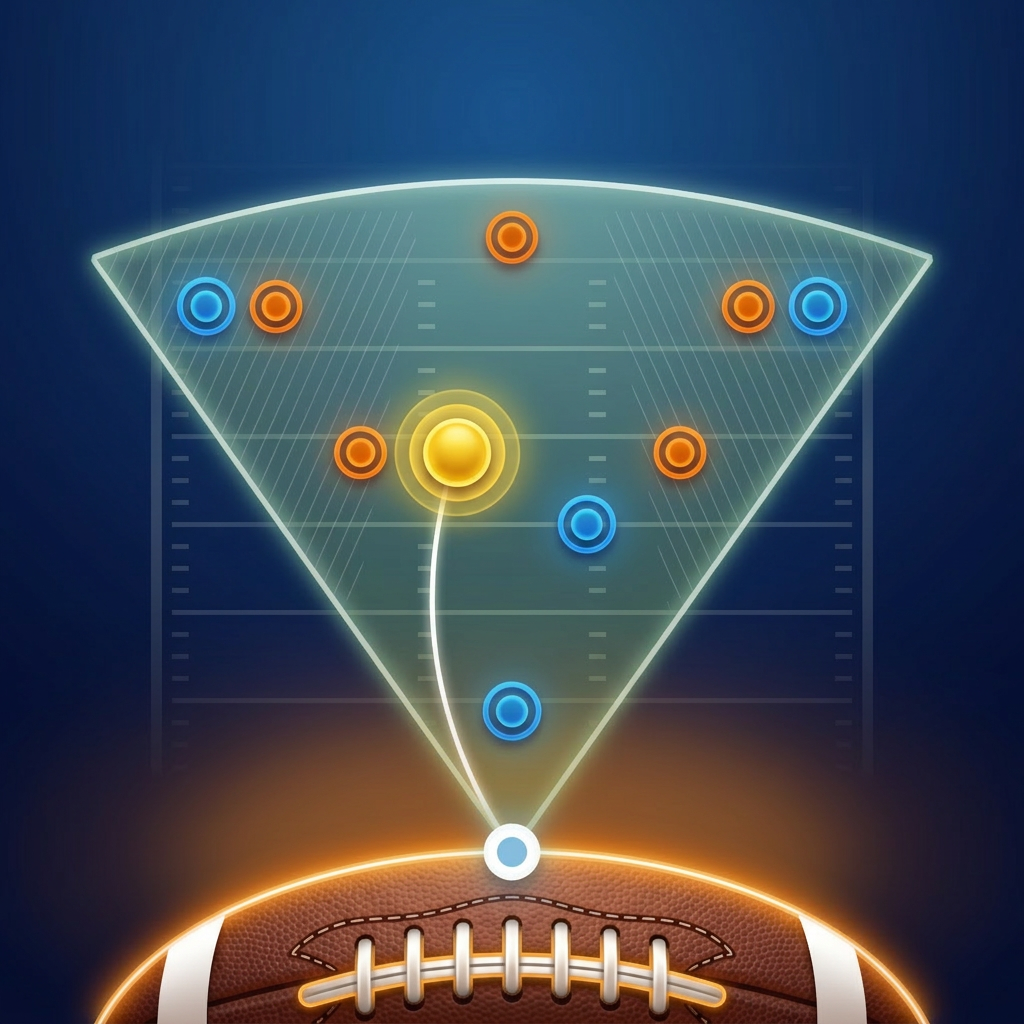
Practice coverage reads interactively
See the Field's Coverage Read mode shows you real defensive alignments and quizzes you on identifying the coverage. 20 coverages, adaptive difficulty. Free for iOS.
Download FreeAdvanced Reads
Once you're comfortable with the basics, look for these tells:
- Linebacker depth — if linebackers are creeping toward the line, expect a blitz or run defense. If they're dropping back, it's zone.
- Nickel and dime personnel — more defensive backs on the field (5 or 6 instead of 4) signals the defense expects a pass.
- Pre-snap movement — safeties rotating late, a corner walking up — these are often disguises. The coverage might not be what it looks like at the huddle break.
- Two-high to one-high rotation — watch the safeties after the snap. Many teams show Cover 2 pre-snap and rotate into Cover 3 at the snap. This is how defenses disguise their intent.
Keep Learning
- What Are Football Formations? — start here if you haven't read it
- How Football Strategy Helps Your Fantasy Game
- Download the Formations Cheat Sheet (PDF)